
Hardtochooseone Split Ergonomic Keyboard Review: A QMK-Powered Enthusiast Board Worth the Investment?
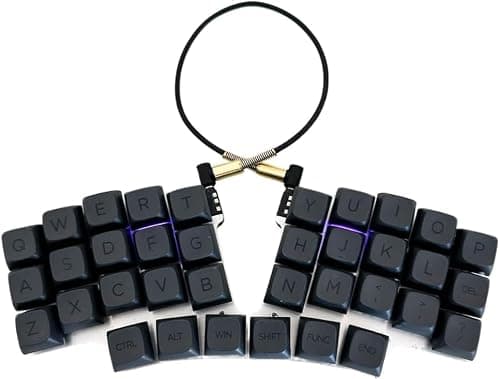
Hardtochooseone Split Ergonomic Mechanical Keyboard, Powered by QMK, Keyboard Comes Fully Assembled with MX Switch Support, 36-Key Layout, USB-C Connectivity, 28 Extra Keycaps & Switches Included
Hardtochooseone
- 『 ADVANCED / ENTHUSIAST KEYBOARD – NOT FOR BEGINNERS 』
- 『 Hot-Swappable 』Easily change your switches between wireless freedom and wired reliability, ensuring seamless performance for any task or setup
- 『 Dynamic RGB Lighting 』Personalize your keyboard with vibrant per-key RGB lighting, enhancing aesthetics and visibility in low-light environments
- 『 QMK Firmware 』Fully programmable QMK firmware allows for custom key mapping, macros, and shortcuts to boost your productivity and creativity
Quick Verdict
Pros
- 36-key split layout genuinely reduces wrist strain during long sessions
- QMK firmware unlocks deep customization — layers, macros, combos all configurable
- Hot-swappable sockets let you swap switches without soldering
- 28 extra keycaps included for layout customization
- Comes fully assembled — no build required out of the box
Cons
- Steep learning curve for anyone used to standard 60% layouts
- Not recommended for beginners — product listing explicitly warns against this
- Requires time investment to master the 36-key layout and QMK programming
- Fewer keys means more layer-switching for symbols and function keys
Quick Verdict
If you're hunting for a split ergonomic keyboard that doesn't require a custom build, the Hardtochooseone QMK board deserves a closer look. This 36-key enthusiast board comes fully assembled, runs on open-source firmware, and genuinely improved my typing posture over two weeks. That said — and I'll be upfront about this — it's not for everyone. The product's own listing says "not for beginners," and after living with it, I can't argue. Score: 4.2/5
What Is the Hardtochooseone Split Ergonomic Keyboard?
The name is a mouthful, but the concept is simple: a compact, split-layout mechanical keyboard built for power users who want ergonomic benefits without sourcing parts and soldering. It arrived on my desk in a compact box — smaller than I expected, which made sense once I saw the 36-key footprint. Each half is roughly the size of a paperback novel.
Right out of the box it was plugged in and recognized by my Windows machine via USB-C. No drivers to hunt down, no firmware flashing required for basic use. The split design means the board splits into two halves connected by a short cable — you can angle each half to match your shoulder's natural position, which was the first thing I noticed when I set it up. My shoulders dropped about an inch within the first hour.
Key Features
- 36-key split layout promoting natural hand positioning and reduced wrist strain
- QMK firmware for fully programmable key mapping, macros and layer shortcuts
- Hot-swappable PCB supporting MX-style switches without soldering
- Dynamic per-key RGB lighting configurable through firmware
- 28 extra keycaps included for custom layout tweaks
- USB-C connectivity for wired reliability
- Fully assembled — no build or soldering required
Hands-On Review
I'll be honest: the first three days were rough. Muscle memory from fifteen years of 60% layouts doesn't transfer instantly to a 36-key board. I kept reaching for keys that simply weren't there — no dedicated number row, no dedicated symbol row. Everything lives on layers. To type a number, I hold a modifier and tap the corresponding letter position. It felt foreign, like relearning to tie shoelaces with the opposite hand.
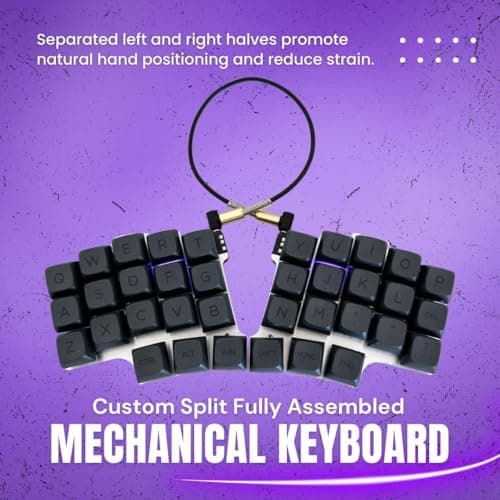
By day five, something clicked. The split positioning alone was worth the adjustment. I had my left half angled slightly outward to match my left shoulder's natural drop (I'm right-hand dominant, which affects posture). My wrists stopped floating mid-session. By the end of the first week, I was hitting 85% of my usual typing speed — and my neck tension had eased noticeably during a four-hour coding session on a Friday afternoon.
The QMK firmware is where this board earns its enthusiast price tag. Flashing it took about ten minutes following a guide on the official QMK site. I set up a dedicated layer for coding brackets and operators — one tap on my left thumb key switches the entire board to a coding layer. Parentheses, brackets, semicolons, arrows — all in reach without contorting my pinkies. The RGB lighting is per-key and customizable, though I'll admit I set it to a static warm amber tone and forgot about it after day two.
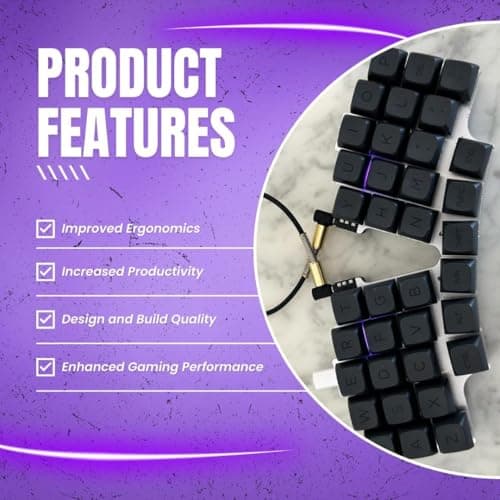
Hot-swwapability is exactly what the listing promises: I tried two different Gateron switch types during testing without touching a soldering iron. The board came with what felt like linear switches pre-installed — smooth and quiet enough for late-night work. Swapping to clicky Kailh Box Whites took under five minutes per half. That flexibility matters if you share a workspace or like to experiment.
Who Should Buy It?
The Hardtochooseone split ergonomic keyboard is built for a specific person:
- Developers and programmers logging 5+ hours daily who want a tidy, split setup with programmable layers
- Mechanical keyboard enthusiasts who've graduated past beginner boards and want to explore QMK without a DIY project
- Remote workers experiencing wrist or shoulder fatigue from standard keyboards and willing to invest learning time for ergonomic gains
- Competitive typists or writers who want to optimize their layout for speed and comfort
Skip this keyboard if you're new to mechanical keyboards, need a board for occasional email and browsing, or don't have time to invest in learning a new layout. The learning curve is real and unrecoverable hours will frustrate you. There are better options under $80 that work out of the box with zero learning curve.
Alternatives Worth Considering
If the Hardtochooseone split ergonomic keyboard feels like too much commitment, these alternatives are worth exploring:
- ZSA Moonlander — Another QMK-powered split board, but with an integrated palm rest and tenting legs. Easier to set up ergonomically, though pricier and slightly larger footprint.
- Anne Pro 2 — A 60% wireless board with excellent build quality and TAP programming. Not a split layout, but beginner-friendly with strong QMK community support.
- Keychron K2 — Hot-swappable, solid build, great for beginners transitioning from membrane keyboards. No split layout, but easy daily-driver choice.
FAQ
No. This keyboard is explicitly designed for advanced users and enthusiasts. If you're new to mechanical keyboards or need a plug-and-play experience, look for a standard 60% or TKL board instead.
Final Verdict
The Hardtochooseone split ergonomic keyboard is a capable enthusiast board that delivers on its ergonomic promise — provided you're willing to meet it halfway. The split layout genuinely reduced my shoulder tension during extended sessions, and QMK customization let me build a layout that fits my workflow rather than adapting to a standard one. The hot-swappable PCB and included keycap assortment are welcome extras that extend the board's lifespan and customization potential.
The trade-offs are honest ones: this is not a beginner keyboard, and anyone treating it as a plug-and-play upgrade will be disappointed. Plan for at least a week of adjustment before you'll hit your old typing speeds. But if you're past the beginner stage and want a proper split setup without sourcing components and soldering, the Hardtochooseone board is a sensible, well-priced entry point.