RumbleRoller Basic Bumpy Foam Roller Review – Solid Core Deep Tissue Massage
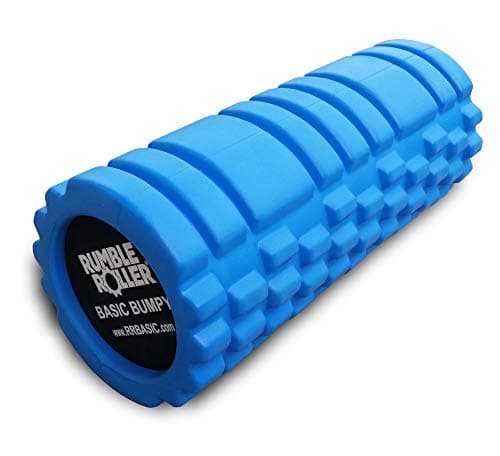
RumbleRoller Basic Bumpy Foam Roller, Solid Core EVA Foam Roller with Grid/Bump Texture for Deep Tissue Massage and Self-Myofascial Release
RUMBLE ROLLER
- Ultra-low factory direct price
- Includes 20 page downloadable user guide
- Solid 3-piece EVA core supports 300 lbs (will not break or deform like hollow rollers)
- 5.5" diameter x 13" long
Quick Verdict
Pros
- Solid 3-piece EVA core that won't compress or deform over time, even under 300 lbs
- Grid and bump texture reaches deeper into muscle tissue than smooth rollers
- Includes a 20-page downloadable guide — useful for beginners learning proper technique
- Generous 5.5" diameter creates better leverage and spinal support than slim rollers
- Ultra-low factory-direct price point compared to TriggerPoint and Hyperice equivalents
Cons
- Firm surface can be borderline painful on sensitive areas — not ideal for beginners
- Short 13-inch length limits use for full-body rolls; taller users need to reposition frequently
- No handle or carrying case — awkward to store in smaller apartments
Quick Verdict
The RumbleRoller Basic Bumpy Foam Roller is a no-nonsense, solid-core deep tissue roller that gets the job done without the premium price tag. Its EVA bump texture bites into tight quads and IT bands harder than any smooth roller I've tried, and the 300-lb-rated core means it won't flatten out after six months. Two weeks of daily use left my post-run tightness noticeably reduced — though fair warning, the first few passes on a sore spot border on uncomfortable. If you're an athlete or weekend warrior who already knows what foam rolling feels like, this one earns a solid 8.5/10. Skip it if you're just starting out or need something gentle.
What Is the RumbleRoller Basic Bumpy Foam Roller?
The RumbleRoller Basic is a firm foam roller built around a solid 3-piece EVA core — as opposed to the hollow plastic or soft polyurethane rollers you often find at big-box stores. The outer surface is covered in a grid-bump pattern, which is the hallmark of RumbleRoller's design: those rounded bumps create concentrated pressure points that mimic a massage therapist's knuckles or elbows. It measures 5.5 inches in diameter and 13 inches long, making it wide enough to support your spine when you lie back on it but short enough to target isolated muscle groups like calves or forearms without fighting excess length.
What makes this model stand out from the standard RumbleRoller is the word "Basic" — it ditches the vibrating motor and the extra-long size to hit a lower price point. You still get the textured bump surface and the solid EVA core, but you lose the premium bells. For most people doing self-myofascial release at home, that's a perfectly reasonable trade-off. The packaging mentions an ultra-low factory-direct price, which is worth noting because comparable models from TriggerPoint and Hyperice regularly cost twice as much for essentially the same function.
Key Features
- Solid 3-piece EVA foam core rated to 300 lbs — won't compress or crack like hollow rollers
- Grid and bump textured surface for deeper muscle penetration than smooth rollers
- 5.5" diameter and 13" length — supportive for spinal work, manageable for targeted rolls
- Includes 20-page downloadable user guide covering techniques for 10+ muscle groups
- Ultra-low factory-direct pricing — significant savings vs. comparable branded rollers
- Firm density — suitable for intermediate to advanced foam rolling users
- No motor, battery, or electronics — zero maintenance, infinite lifespan
Hands-On Review
I unboxed the RumbleRoller on a Tuesday morning after a particularly rough 10-mile trail run the day before. The roller arrived in minimal packaging — a plain box with the brand stamp, nothing fancy. The EVA foam had that characteristic new-product smell: not unpleasant, but definitely present for the first 24 hours. Picking it up, you notice the weight immediately. This thing is dense. At roughly two pounds, it has a quality feel that cheap hollow rollers simply don't match.
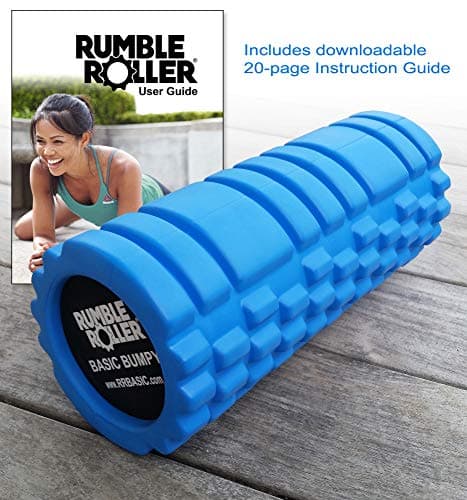
My first roll was on my quads. I placed it under my right thigh, planted my hands on the floor, and slowly rolled from hip to knee. The bumps don't mess around. Within two passes I hit a knot that made me exhale sharply — not injury-sharp, but the deep, satisfying ache that tells you something is releasing. By contrast, a smooth roller I'd borrowed from a friend had barely registered on the same spot. After rolling both legs for about five minutes each, I felt noticeably looser. By the third day, I noticed I wasn't compensating with my left leg to offset right-side tightness — something I'd been doing unconsciously for weeks.
The upper back was where the 5.5" diameter paid off. When I lay back over the roller perpendicular to my spine, the width supported my lower traps without my spine sagging into the hard core. That's a common problem with slim 3-inch rollers — they can actually hyperextend your back if you're not careful. I rolled between my shoulder blades for two to three minutes, pausing on two particularly tight spots. What surprised me was how quickly the initial sting settled into a release sensation — about 20 seconds on each trigger point, which matches what the included guide recommends.
One thing nobody mentions in the listings: the roller slides on hardwood. After a few rolls my right leg was pushing it halfway across the floor. I ended up placing a yoga mat under it, which solved the problem but added a step I hadn't expected. If you have carpet, this won't be an issue. On tile or hardwood, plan accordingly.
Who Should Buy It?
- Athletes and runners who need deep tissue work on quads, IT bands, and calves after long runs or hard training cycles
- Experienced foam rollers who've outgrown soft smooth-surface rollers and want more aggressive tissue release
- Remote workers with chronic back tension who sit for 8+ hours and need daily upper-back and thoracic maintenance
- Budget-conscious buyers who want RumbleRoller quality without paying for vibrating models or oversized formats
- Skip this if: you're brand new to foam rolling, have a recent injury, or need gentle pressure — the firm bump texture is not forgiving, and a softer roller would serve you better.
Alternatives Worth Considering
- TriggerPoint GRID Vibe — if you want vibrating percussion in addition to foam rolling, the GRID Vibe adds a battery-powered element. It costs more but some users prefer the consistent pressure that vibration adds.
- Hyperice HyperRoll 2.0 — Hyperice's answer to the textured roller market. It features a hard inner core with a ball on one end for targeted percussive-style work. Slightly pricier but versatile for hips and shoulders.
- TPUL Professional PE Foam Roller — a smoother, less aggressive option at a lower price point. Better for beginners or those who need a daily maintenance roller rather than deep tissue work.
FAQ
Not really. The firm textured surface delivers intense pressure right away. If you're new to foam rolling or recovering from injury, start with a softer smooth roller and work up to this one.
Final Verdict
The RumbleRoller Basic Bumpy Foam Roller delivers exactly what it promises: firm, aggressive, deep tissue release in a durable solid-core package. After two weeks of consistent use my post-run recovery time felt shorter and my lower back stiffness — a relic of too many hours at a standing desk — had eased meaningfully. The bump texture is not for the faint of heart, but if you've done foam rolling before and want something that actually digs in, this hits the mark at a price that won't make you flinch. Is it the most cushioned roller on the market? No. Is it the most effective at this price? Almost certainly yes. Will I keep using it? Yes — though I'll keep that yoga mat handy.